Rideshare accidents are legally more complex than standard car crashes. There are multiple parties, insurance policies and California laws that shift. This move depends on what the driver was doing the moment the crash occurred. So, no matter if you are a passenger, pedestrian, or another driver, understanding how liability works is important.
Besides, an experienced uber & lyft accident lawyer in Anaheim can help you identify who is responsible and what compensation you may be entitled to.
Three Insurance Periods that Decide Everything
California law under Assembly Bill 2293 divides every rideshare trip into specific insurance periods. The period where the driver was in the moment of crash determines which insurance policy is active and how much coverage applies.
| Period | Driver Status | Coverage in Effect |
|---|---|---|
| Period 0 | App is off | Driver’s personal auto insurance only |
| Period 1 | App on, no ride accepted | Limited TNC coverage ($50K per person / $100K per accident) |
| Period 2 | Ride accepted, en route to pickup | $1 million TNC commercial liability policy |
| Period 3 | Passenger in vehicle | $1 million TNC commercial liability policy |
What Changed Under Senate Bill 371 in 2025?
California passed Senate Bill 371 which took effect October 1, 2025. This thing significantly reduced the mandatory Uninsured and Underinsured Motorist coverage that rideshare companies must carry for passengers.
In addition, the previous requirement was $1 million in UM/UIM coverage per person. That figure has now been reduced to $60,000 per person and $300,000 per accident under AB 1340. This actually matters when a third-party uninsured driver causes your crash while you are riding in an Uber or Lyft.
When is the Driver Liable Vs When is Uber or Lyft Liable?

According to the Supreme Court’s upheld Proposition 22 in July 2024, rideshare drivers are independent contractors. This limits the direct vicarious liabilities for Uber and Lyft. Yet, it does not remove their responsibility completely. So, these companies can still be liable for negligent hiring, negligent retention, and supervision.
Furthermore, if a platform allowed a driver with a dangerous history to keep operating then that is a direct liability claim against the company itself.
Here is what more you must know:
- The driver is liable when their negligence directly caused the crash, such as speeding, distracted driving, or running a red light.
- The TNC is liable through its commercial policy in Periods 2 and 3, regardless of who caused the crash.
- The TNC can also face direct liability for bad hiring or retention practices that put an unsafe driver on the road.
- A third-party driver who caused the crash is liable through their own insurance. The TNC’s UM/UIM coverage fills any remaining gap.
Can a Passenger Be Liable in an Anaheim Rideshare Crash?
Passengers are rarely found liable in rideshare accidents. A passenger has no control over a vehicle and no duty of care toward other road users. However, there are narrow exceptions here. If a passenger physically interferes with the driver or acted in a way that could crash, they could face liability. In those rare cases, the passenger’s own liability coverage would be the primary source.
Moreover, most rideshare passengers have no personal auto policy applicable to situations where they are not driving. Hence, if you are injured as a passenger and are worried about whether your actions could complicate the claim, then speak to an Uber & Lyft accident lawyer in Anaheim.
What to Do After a Rideshare Accident in Anaheim?
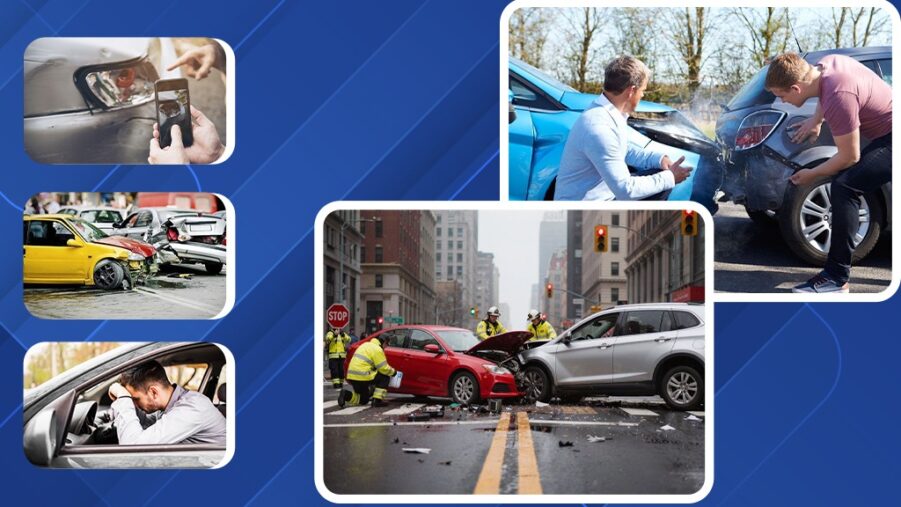
Here is what you must do soon after experiencing a rideshare accident:
- Call 911 and get a police report filed at the scene. Do not leave without one.
- Screenshot your ride details inside the Uber or Lyft app before closing it. This preserves the period data critical to your claim.
- Photograph the scene, vehicle damage, and any visible injuries from multiple angles.
- Get the names and insurance information of every driver involved.
- Seek medical attention the same day, even if you feel fine. Delayed symptoms are common after car accidents.
- Contact a qualified Uber & Lyft accident lawyer in Anaheim before speaking to any insurance adjuster.
Final Thoughts
Rideshare accident liability claim in Anaheim is layered. The app status at the time of the crash, the 2025 SB 371 insurance changes, and other things can all affect your claim in ways a standard car accident does not. Knowing the rules gives you a real advantage from day one.
A1 Accident Lawyer handles rideshare injury cases on a no-win, no-fee basis. We work quickly to preserve the app data and insurance records that make or break these claims. Visit us online or call today for a free consultation.
FAQs
Does Uber’s insurance cover me as a passenger in an accident?
Yes. If the accident occurred during Period 3, Uber’s $1 million commercial liability policy applies as primary coverage. This covers your medical bills, lost wages, and other damages regardless of who caused the crash.
What if the Uber driver was at fault?
The driver’s negligence does not remove TNC coverage. Uber’s $1 million commercial policy still applies in Period 2 and 3, and you can pursue both the driver and the company depending on the circumstances.
What changed for rideshare passengers under SB 371?
As of October 1, 2025, California reduced mandatory UM/UIM coverage for rideshare companies from $1 million to $60,000 per person. This affects claims where an uninsured or underinsured third party caused the crash.
How long do I have to file a rideshare accident claim in California?
California law gives you two years from the date of the accident to file a personal injury claim under CCP §335.1. Acting sooner protects your evidence and legal options significantly.
Can Uber or Lyft be held directly responsible for a crash?
Yes, through direct liability claims for negligent hiring, retention, or supervision of unsafe drivers. The company’s independent contractor defense does not shield it from these theories of liability.