Receiving any notice of a restraining order can be stressful. On the other hand, experiencing allegations based on what you believe are false is even worse. All the more, many people do not know what actually happens next. They seem to worry about their reputation, job, and future.
Hence, if you are facing a restraining order hearing, your response matters. The evidence you gather and the steps you take before court often play a major role in the outcome.
This guide explains what you should know about fighting a false restraining order and how a restraining order lawyer in Anaheim helps people understand the legal process.
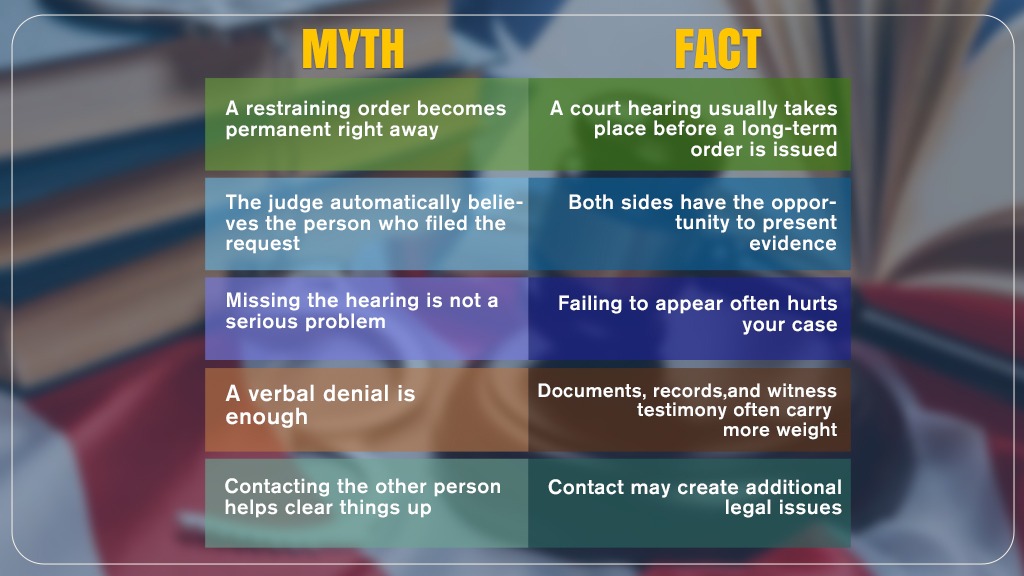
Myth Vs Fact: What You Must Know
Many people enter the process with the wrong expectations. Here are some of the most common myths you will come across.
Understanding the Basics of Restraining Order
A restraining order is made to protect someone who claims they have experienced harassment, threats, abuse, stalking, or violence. Most of the time allegations are supported by strong evidence. Other times the facts are disputed.
False restraining order claims arise from many situations. Family disputes, divorces, child custody disagreements, workplace conflicts, and neighbor disputes are common examples.
In some cases, the person requesting the order believes their version of events. Here, important facts are left out. Furthermore, the court’s job is not to guess what happened. The court reviews evidence presented by both parties. This is why preparation matters.
How to Prepare Yourself to Handle the Legal Matter?
Many people panic when they receive legal documents. Some put the papers aside and avoid dealing with them.
As per restraining order lawyer in Anaheim, the paperwork will explain:
- What allegations have been made
- The hearing date
- Any temporary restrictions
- Filing deadlines
So, you must read every page carefully. If something seems inaccurate, make note of it. Those details may become important later. A temporary restraining order is not the same as a permanent one. The hearing is often your opportunity to respond.
Examples of Evidences that May Turn Helpful
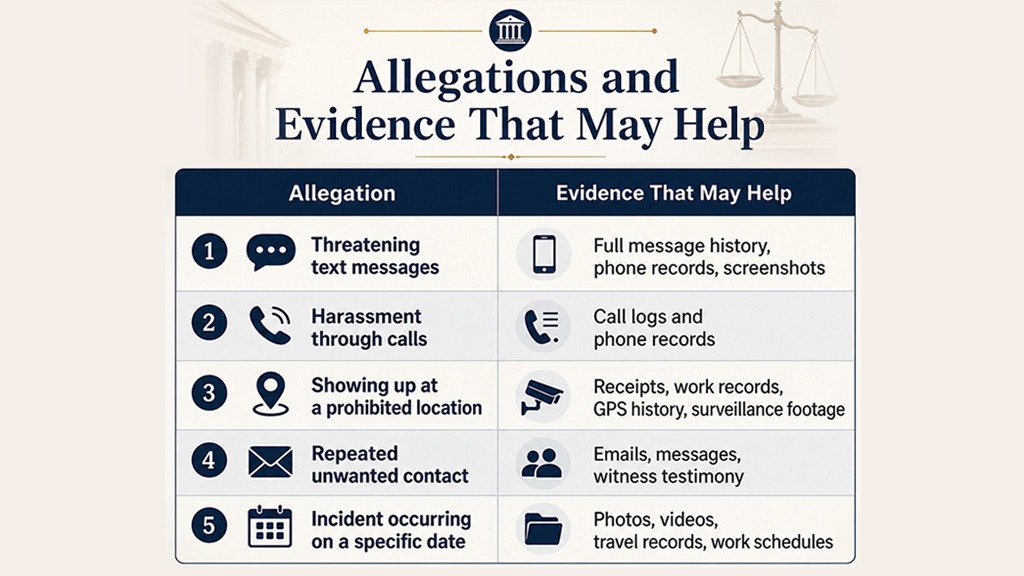
When courts review restraining order cases, evidence often carries more weight than opinions.
Here are examples of evidence that may help address specific allegations.
Things to Do Before the Hearing Date
Many people assume they have no evidence until they begin reviewing records. A simple receipt or timestamp sometimes becomes an important piece of information. The period before the hearing is often more important than people realize.
In one glance, a false allegation may seem easy to disprove. Then the hearing date gets closer, and important records become harder to locate.
Start collecting information as soon as possible.
Look through your:
- Text messages
- Emails
- Social media activity
- Photos
- Videos
- Phone records
- Calendar entries
- Work schedules
Organize everything by date. The easier your records are to follow, the easier they are for the court to understand. A restraining order lawyer in Anaheim often helps identify evidence people overlook.
Questions to Ask Yourself Through the Process
Make sure to ask yourself these questions to get started right away:
- Do you have text messages related to the allegations?
- Were there witnesses present during the alleged events?
- Do you have photos or videos from the dates mentioned?
- Do work records show where you were?
- Do social media posts contradict the allegations?
- Are there emails that provide additional context?
Even one piece of supporting evidence can become important during a hearing. A witness does not need to know every detail of the dispute. Sometimes a witness only confirms one important fact.
Things Not to Do Before the Hearing Process
Even if you believe the allegations are completely false, follow the temporary order exactly as written.
- Do not call the other person.
- Do not send text messages.
- Do not ask friends or family members to communicate on your behalf.
Many people create new legal problems by trying to explain their side directly. The hearing is where your response belongs.
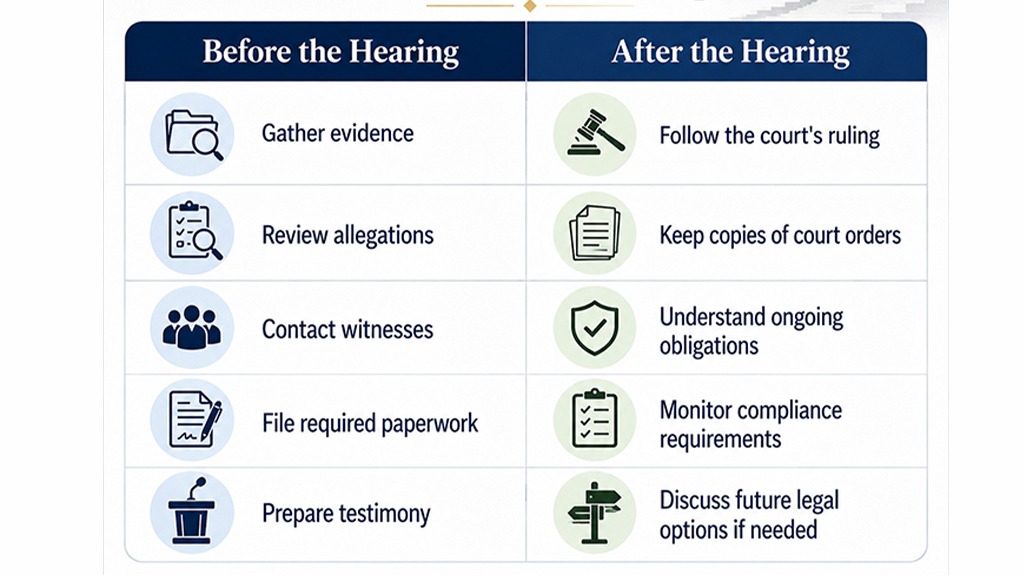
What Happens Before and After Hearing?
Here is what takes place before and after hearing:
Final Takeaway
Finally, if you are dealing with a restraining order case, speaking with a restraining order lawyer in Anaheim helps you understand the process, evaluate evidence, and respond effectively to the allegations. So give your best and your professional lawyer will do the rest.